Looking for a lattice patio cover — or a combination lattice-solid cover? A lattice cover is the open-beam pergola look: evenly spaced rafters that block 40% to 60% of direct sunlight while letting breezes flow through. A solid cover gives you a real roof with full shade and rain protection. An insulated solid cover adds a foam core that cuts heat transfer. And a combination cover mixes them — solid where you dine, lattice where you want light.
This guide compares all three, plus the combination most homeowners actually choose, so you can pick by how you use your patio, which way it faces, and what your HOA allows.
Lattice covers: filtered sun and airflow
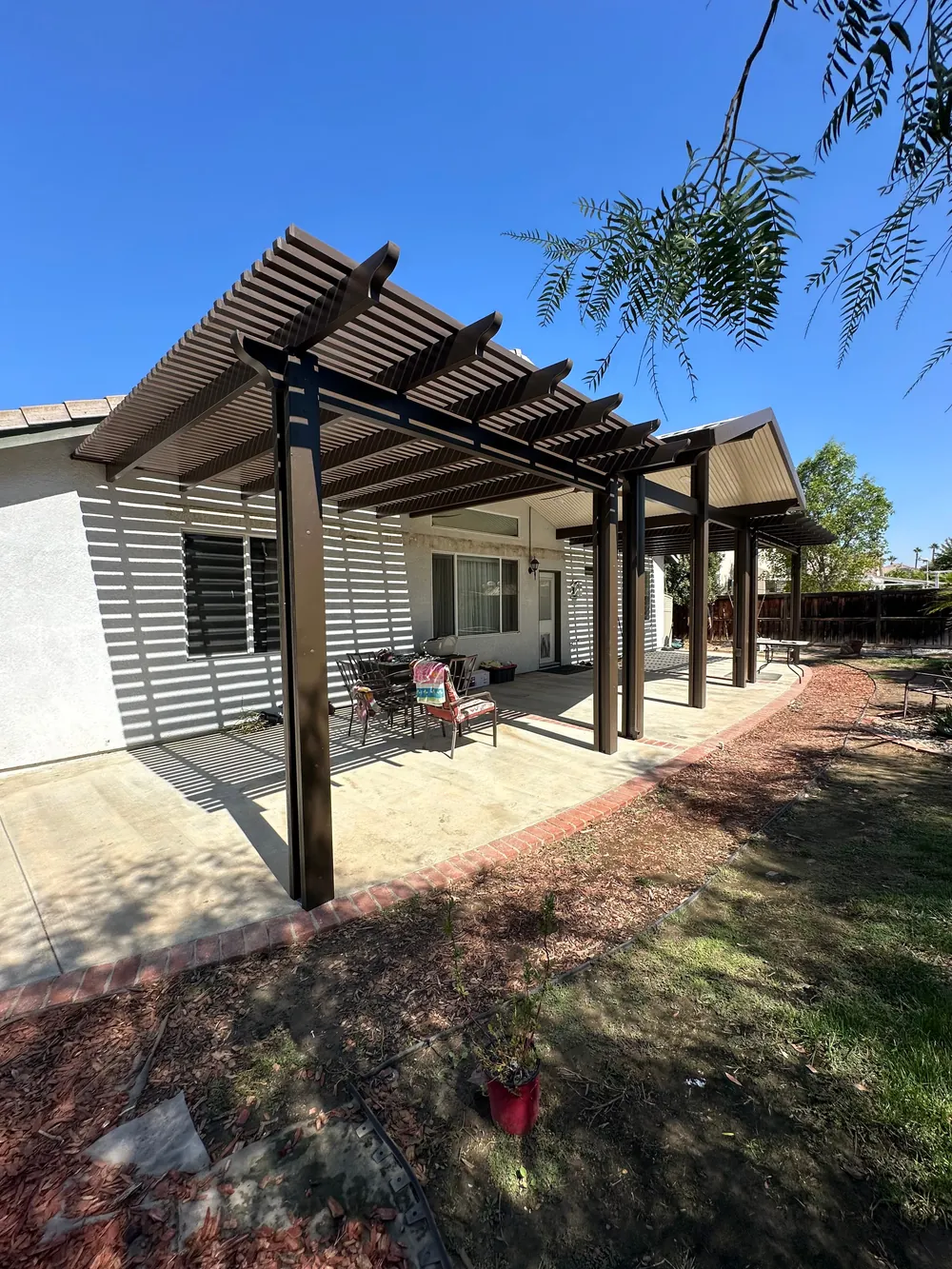
A lattice cover is the open-beam pergola look — evenly spaced rafters overhead that block 40% to 60% of direct sunlight while letting breezes flow through. You get dappled shade that moves with the sun.
Best for: gardens, pool areas, and anyone who likes the feel of being outdoors rather than under a roof. It's also the most cost-effective of the three.
Trade-offs: it won't keep you dry in rain, and on a 100-degree Corona afternoon, partial shade is still partial shade.
Lattice is also the most HOA-friendly of the three in planned communities — it reads as a garden structure rather than an addition. In Irvine, for example, lattice is the most common choice for that reason, and for the filtered light and airflow it gives on mild mornings. See our Irvine patio cover page for how HOA-first planning works there.
Solid (non-insulated) covers: full shade, rain protection
A solid aluminum cover gives you a real roof — 100% shade and genuine rain protection. It reads as an extension of your house, which is why it's the most popular choice for attached patio covers over dining and lounge areas. If a solid cover ever leaks, see our Patio Cover Leak FAQ.
Best for: outdoor dining, furniture you want protected, and creating true indoor-outdoor living space.
Trade-offs: without insulation, the roof can radiate heat on the hottest days. Fine for most of the year; less ideal if your patio faces due west into the afternoon sun.
Insulated covers: the comfort upgrade
An insulated cover looks like a solid cover but hides a foam core inside each panel. That core dramatically cuts heat transfer — your patio stays up to 15 degrees cooler underneath — and it deadens rain noise too.
Best for: west-facing patios, anyone adding ceiling fans and recessed lighting (the panels hide all the wiring), and households that want the patio usable in August, not just April.
Trade-offs: it's the premium option, and the thicker panels sit slightly lower than a non-insulated roof — something your designer will plan around your fascia height.
Combination lattice-solid covers: solid where you dine, lattice where you want light
A combination lattice-solid patio cover puts a solid section over the area you use most — usually the dining or lounge area — and a lattice section where you want natural light, airflow, or a view of the sky. The most common layout is solid insulated over the seating area, with lattice over a garden bed, a pool edge, or the strip of patio in front of your home's windows, so the house itself does not go dark.
When a combination makes sense:
- You want full shade for dining, but you do not want to block light into the house.
- One part of the patio faces west or south and needs real shade, while the rest faces north or east and does fine with filtered light.
- Your HOA prefers a lighter look on the street-facing side, with full cover only over the back patio.
- You want fans and recessed lighting over the dining area — the insulated solid section hides the wiring — with open lattice elsewhere.
When it does not: if the whole patio faces west into the afternoon sun, or you want the entire patio usable in rain, a full solid or insulated cover is the simpler choice. A combination is a design decision, not a way to make a lattice cover rainproof — the lattice section will still let rain through.
How we plan one: at the free design consultation we measure the patio, note which way each section faces, and show you 3D renderings of the solid and lattice sections on your home before you commit. The split between solid and lattice is decided by use and sun, not by a fixed ratio.
See also: patio covers in Irvine and patio covers in Yorba Linda for how the same choice plays out city by city.
How to choose in 60 seconds
Your sun exposure matters most. North/east-facing patios do great with lattice or solid. West/south-facing patios earn the insulated upgrade.
- Match the use: dining and lounging = solid or insulated; garden and pool = lattice.
- Check your HOA early — some associations have opinions about roof styles and colors.
- Think about add-ons now: fans, lighting, and heaters are cheapest to plan during design, not after the cover is up.
- Still torn? That's exactly what the free design consultation is for — we measure your space, talk through how you actually live outside, and show you 3D renderings of each option on your home before you commit to anything.
Lattice and combination cover questions
1. What is a lattice patio cover?
An open-beam pergola-style cover with evenly spaced rafters overhead. It blocks 40% to 60% of direct sunlight while letting breezes flow through, giving dappled shade that moves with the sun. It will not keep you dry in rain.
2. What is a combination lattice-solid patio cover?
A cover that mixes a solid section and a lattice section on the same patio — usually solid over the dining or lounge area and lattice where you want light or airflow. The solid section gives full shade and rain protection; the lattice section gives filtered light.
3. Is a combination cover more expensive than lattice alone?
We do not publish prices for covers, because every quote depends on size, span, panel type, electrical, and footings. A combination cover is quoted as one custom cover, not as two separate covers. Book a free design consultation for a quote for your patio.
4. Which is better for a west-facing patio, lattice or solid?
Solid, or insulated solid. West-facing patios catch the full afternoon sun, and lattice alone gives only partial shade. If you still want light somewhere on the patio, use a combination — solid over the seating area, lattice elsewhere.
5. Do I need HOA approval for a lattice cover?
Often, yes — many associations have rules about roof styles and colours. Check your HOA early, before you commit to a style. We handle HOA approvals and city permits as part of the job.
Ready to Find the Right Cover for Your Backyard?
Call us at (951) 577-1798 or request a free consultation today. We'll walk you through lattice, solid, and insulated options and show you exactly what fits your space.